News
KYC Regatta Reports
Queen's Sailing at FISU
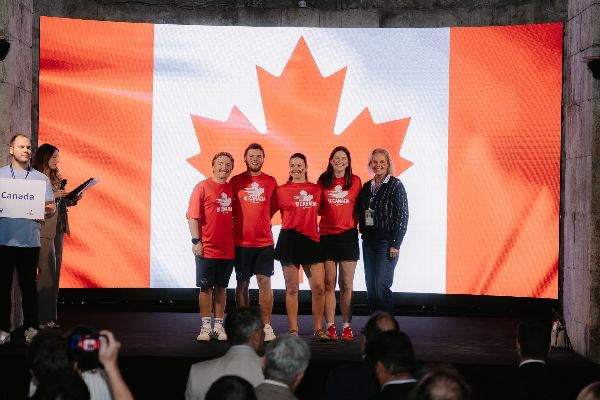
This past summer, I had the privilege of being selected for the FISU World University Sailing Championships, hosted in beautiful Split, Croatia, from September 25th to October 2nd. The other members on my team were Andrew Kenny (Queen’s Sailing), Richard Richlyk Jr (U of Toronto) and Elsie Gillis (Dalhousie). We arrived late on the 24th and settled into our accommodations for the week; a local hostel.
The regatta followed a collegiate-style format, with fifteen teams rotating through five boats. Each rotation consisted of three flights, and the target race time was fifteen minutes, capped at twenty. This kept the racing extremely tight and tactical, minimizing differences in boat speed and handling. We sailed Melges 20s, and for many countries it was their first time in the boats, or even their first time sailing together as a team, since crews were selected from universities across each nation. We had two days of training before racing began, which helped us dial in our boat handling and teamwork. By Monday, we felt ready and excited.
The event scheduled sixty races in total, with twenty races per team. To stay on track, the race committee needed to complete five rotations each day. Split is known for its reliable sea breeze, and right on schedule at 14:00 every afternoon, a gorgeous 8–10?knot southwest breeze filled in. Unfortunately, with sunset at 18:45, daylight limited how many races could be completed.
On day one, once the breeze arrived, we headed out and managed four rotations (twelve races) before sundown. We started slowly with a fourth but finished the day with a win. The short upwind legs made the start critical, and the starboard advantage up the beat required a quick shift in mindset from longer fleet?race strategies to this much shorter format. All boats were rigged identically, ensuring the playing field was as even as possible. Between rotations, teams waited aboard the mothership, which was a large powerboat; where we could watch racing and chat with competitors from around the world.
Day two brought similar conditions, but a ripped gennaker on one boat reduced the schedule to three rotations. Our starting improved, and we pulled off a few cheeky pin?ends starts, once again ending the day with a race win. That evening, our team manager (and “momager”), Ann, treated us to a lovely dinner at a local restaurant.
Fueled by that dinner, we hit the water for days three and four with plenty of enthusiasm. Unfortunately, the racing didn’t go our way. We had a few incidents at the marks and one race where we were over early, almost impossible to recover from in such a short format. Still, there were positives: our boat handling improved significantly, and we executed some strong leeward?mark roundings. Despite the progress, we came up short of qualifying for the final series on Friday, finishing 9th out of the 16 countries, with only the top five moving onto the medal round.
Overall, the regatta was an incredible experience, and I’m extremely grateful to have had the opportunity. The biggest takeaway was learning to shift mindsets, quickly transitioning from attacking or defending a position to covering the fleet in a matter of seconds, in a much shorter decision window than traditional fleet racing. Adapting our strategic thinking to different situations proved essential.
A huge thank?you to the Corinthian Fund, Queen’s, Kingston Yacht Club and my family for supporting this regatta. This unforgettable experience would not have been possible without their continued support, and I am so grateful to be surrounded by such an incredible community.
Submitted by Anna Powick