
Room to Tack (Rule 20.2)
This article deals with the question 'What do I do when someone hails for "Room to Tack!"'
We'll be discussing Rule 20, but primarily focusing on Rule 20.2 - Responding.
Rule 20.1 tells a boat when they may hail another boat for "Room to Tack".
To quickly summarize Rule 20.1, a boat may hail for room to tack when:
- They are actually approaching an obstruction, and will soon need to make a substantial course change to avoid it, and
- they are sailing close hauled or above
- NOTE: They do not need to be overlapped
When those conditions are met, a boat may hail "Room to Tack".
The word "soon" is important because the boat that made the hail must time their hail such that:
- It is not too much time/distance before a possible collision, and
- The hail is not so late that the boat being hailed does not have time to respond
That means the hailing boat needs to think about how long the other boat(s) needs to prepare and perform a seaman like tack, and then make their hail just before that time. You also need to consider whether the hailed boat needs to pass on the hail (Rule 20.3) and account for how long that will take.
Ok, so now you have been hailed "Room to Tack", what can you do?
This is Rule 20.2. You have 2 acceptable choices, and 1 very bad choice:
- You can tack immediately. Once you have tacked, you have satisfied your obligations. The hailing boat can then tack and figure things out on their own, or
- You can respond with a reply of "You Tack". Then you must make sure they can then tack and avoid you in some seaman like manner, or
- You can do nothing, in which case you will very likely be protested and disqualified (once the other boat extracts themselves from the collision with the rocks).
- Even if you think the hailing boat was wrong to hail, or didn't meet the necessary conditions,
- you still must respond with one of the first two options.
- You can then choose to protest if you think the hailing boat broke Rule 20.1
Ok, from the first two choices above, there are 3 basic maneuvers that you can perform to satisfy the rule. They are:
- Tack as soon as possible, or
- Reply "You Tack" and either
- Ducking the hailing boat, or
- Letting the hailing boat duck you
The choice really depends on the relative position of yourself and the hailing boat. Your decision may be influenced by the tactical consideration of where you want to end up after responding, but more often that not, you will have little choice in how you respond. Lets look at these options in more detail.
Just to Clarify: If you reply "You Tack!", then you immediately become bound by the obligation:
- to give the hailing boat "room to tack and avoid" you (in a seaman like manner)
This obligation are satisfied once the hailing boat has tacked and is no longer at risk of colliding with you.
It is Important note that under normal conditions if Yellow is a leeward or clear ahead boat (not a Rule 20 situation),
- Yellow may be able to luff up to head to wind (subject to Rule 17 limitations), but
- If Yellow tacked (passed head to wind), then Rule 13 would apply and she would become the keep clear boat
Rule 20.2 makes an exception to this by giving the hailing boat "room to tack and avoid" the other boat.
While not mentioned in the rule, you need to make sure that it is obvious to the hailing boat how they should avoid you. Just because you see a way they can get by you, doesn't mean they will see that too. It might be prudent to communicate that with an additional hail, such as "You Tack! .. and I will duck you"
The follow describes what your likely options are and what they look like:
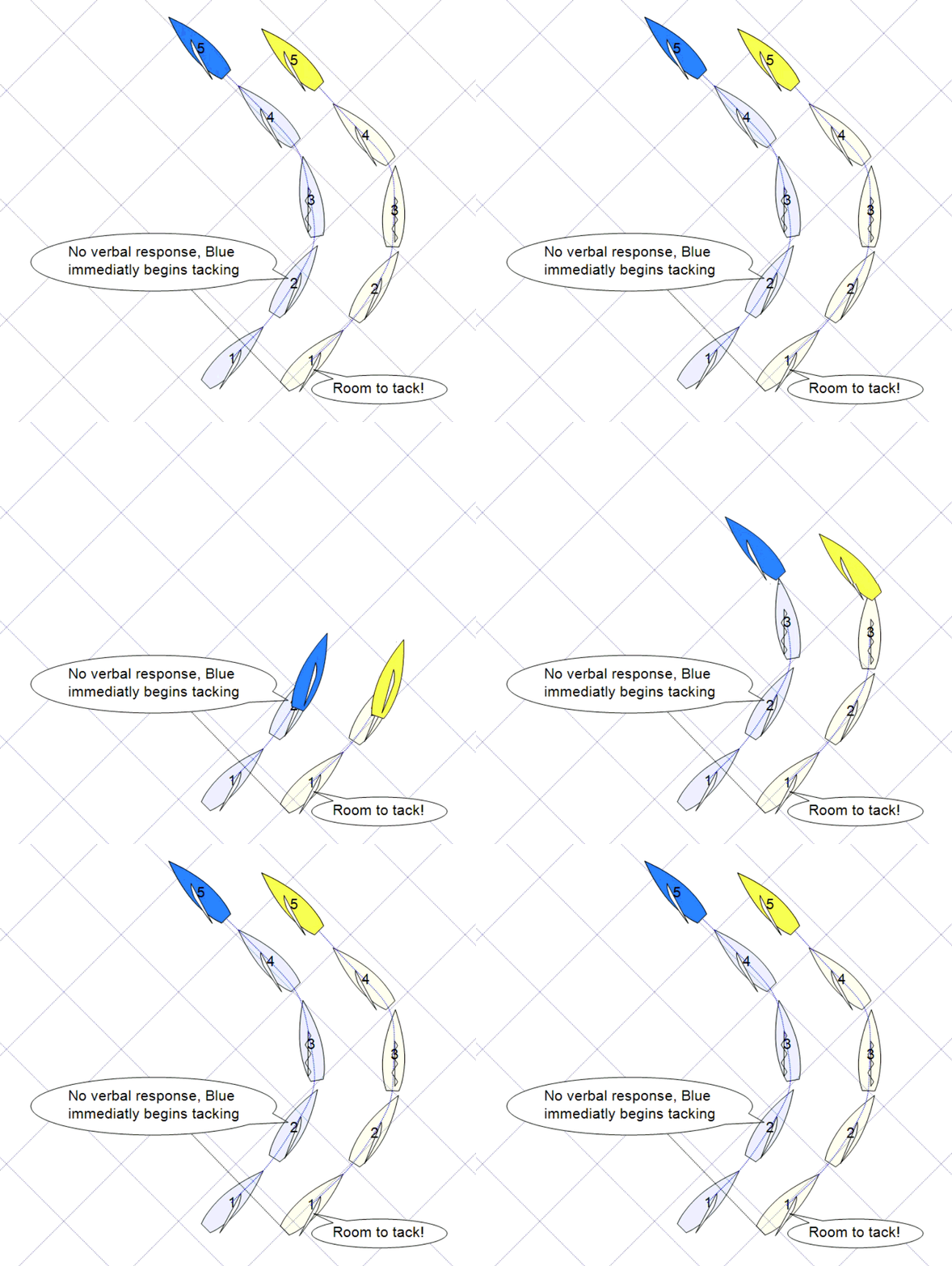 Tacking Immediately:
If you and the hailing boat overlapped to a significant degree or they are overlapped and somewhat ahead of you, then this is the likely choice of what you can do.
- You must tack "as soon as possible".
- This may mean you need to pass along the hail (Rule 20.3). You then perform your tack as soon as the boat you hailed responds (if any).
- All obligations of Rule 20.2 then end once you have tacked (and they have tacked immediately), and normal rules resume
As in the example, you may have started as the keep clear boat (Rule 11), and ended up as the right of way boat (also Rule 11), so you may be able to luff (Rule 17 is likely not to apply), or just carry on sailing a close hauled course.
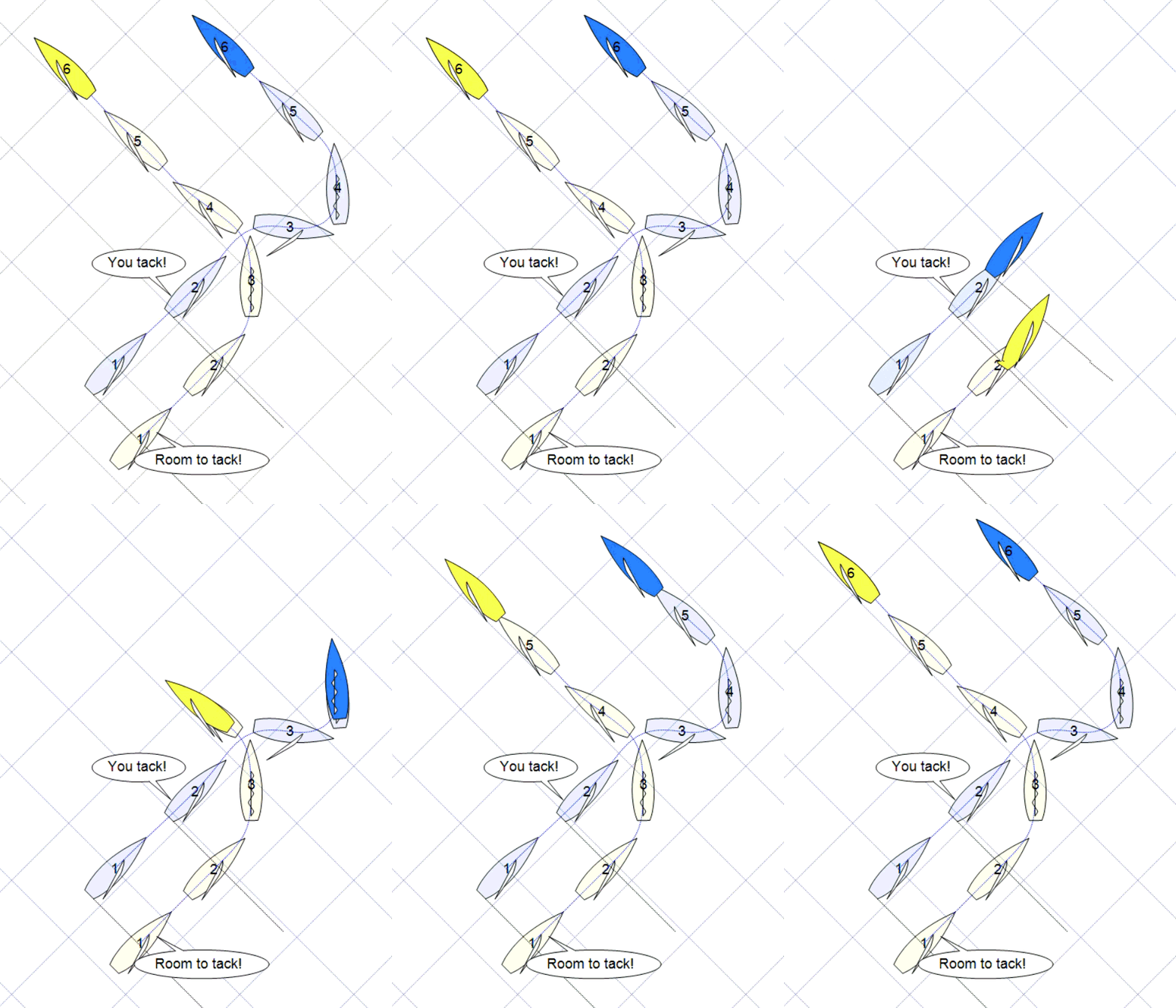 Replying "You Tack" so they can Duck:
This is an option you might choose if you were leading the hailing boat and wanted to end up with clean air to windward of them (Note: you'd also become the keep clear boat). You have to be confident that the hailing boat could tack and you would be able to make any necessary maneuvers to give them "room to tack and avoid" you.
Let's walk through this scenario:
- Position 1:
- Yellow, approaching some unknown obstructions, hails "Room to Tack!"
- Position 2:
- Blue (you!), looks around, and thinks Yellow can tack and duck below Blue
- Blue hails "You tack!"
- Position 3:
- Yellow has begin her tack
- Blue bears off to be sure your transom is swung clear on Yellow's bow
- Position 4:
- Yellow has completed her tack, and is on a close hauled course
- You (Blue) are now able to tack
- Position 5:
- Both Blue and Yellow have tacked
- You have maintained a windward position (but fallen back)
Comments:
- This particular scenario is somewhat risky for you (Blue).
- Yellow does not have the right to make a perfect "high performance" tack, which might be their preferred avoiding maneuver, but
- Yellow does need enough room to tack and avoid in a seaman like manner.
- Blues "wiggle" to let Yellow duck is cutting it close!
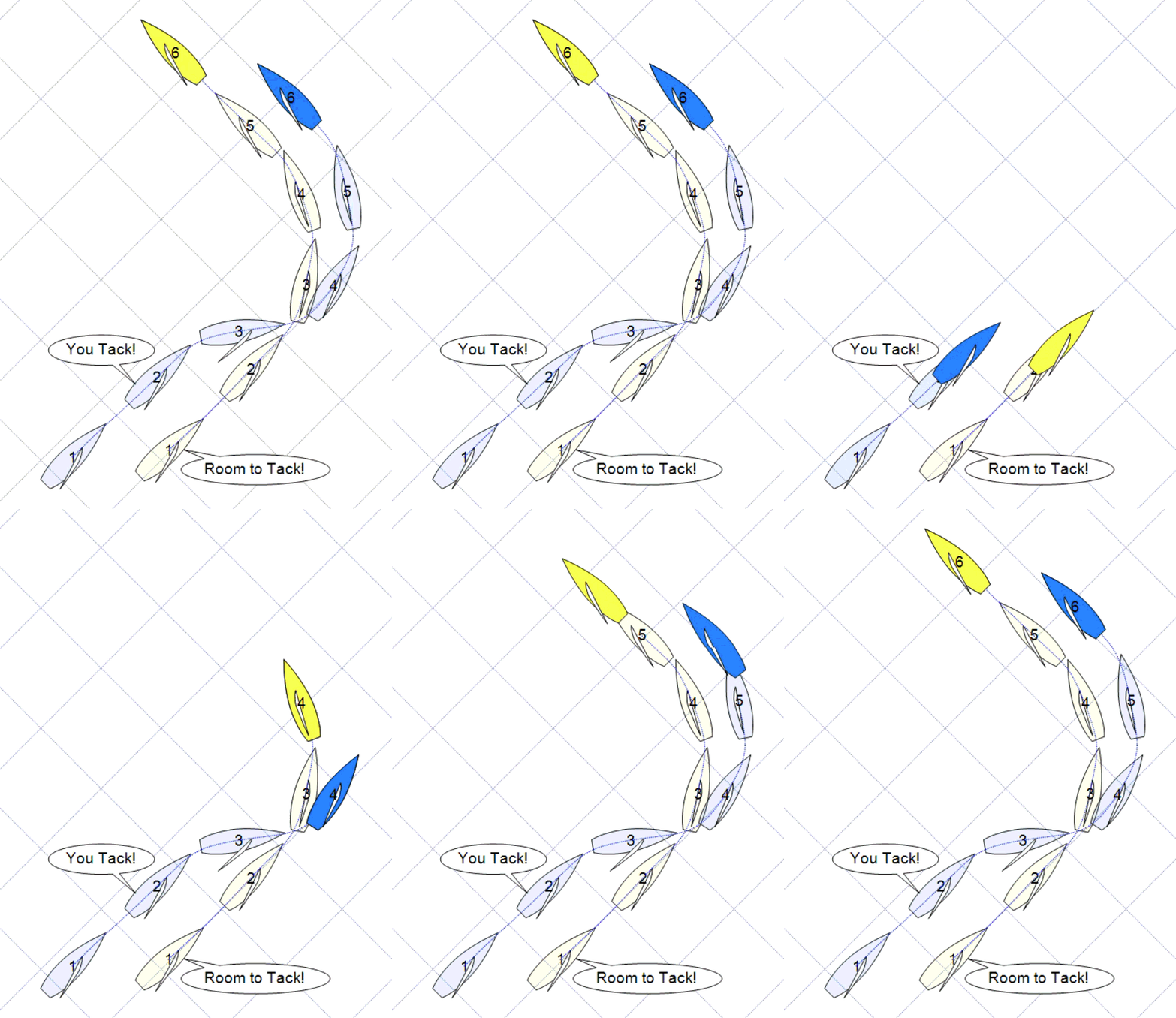 Replying "You Tack" and Ducking:
This is an option you might choose if you were behind the hailing boat and wanted to end up with clean air to windward of them (Note: again, you'd also become the keep clear boat). You have to be confident that the hailing boat could tack and you would be able to make any necessary maneuvers to give them "room to tack and avoid" you.
Let's walk through this scenario:
- Position 1:
- Yellow, approaching some unknown obstructions, hails "Room to Tack!"
- Position 2:
- Blue (you!), looks around, and thinks she can duck Yellow when Yellow tacks
- So you hail "You tack!"
- Position 3:
- Yellow has begin her tack
- You (Blue) bear off to duck Yellow's transom
- Position 4:
- Yellow has almost completed her tack
- You (Blue) are now able to tack
- Position 5:
- Both Blue and Yellow have tacked
- You have maintained a windward position (but fallen back)
Summary:
Hopefully this review of Rule 20.2 provides an explanation of the requirements and obligations that are triggered when a boat hails "Room to Tack".
- The hailed boat must respond (by either tacking or hailing "You Tack")
- If you choose to tack, then you must do it immediately (you do get time to pass along the hail and get a response).
- If you respond with "You Tack", then you must provide room to "tack and avoid" you.
- If you respond with "You Tack", then the other boat must tack immediately